Structural Integration and Movement for Active People
Structural Integration and Movement for Active People
You train regularly, love the mountains and value an active lifestyle. You choose your equipment carefully to feel safe along the route. But have you ever wondered why, sometimes, movement feels harder than it should? What if an invisible brake on your agility and endurance lies within you — and has nothing to do with muscular weakness or lack of motivation?
Many active people experience periods of overload, tiredness or stiffness. Causes may vary, and persistent problems require medical assessment.
Research on fascia has expanded in recent decades and investigates its role in force transmission and proprioception.
Structural Integration (SI) explores the relationship between fascia, posture and movement. It is an approach that considers the body as a unified system, able to work in harmony with gravity rather than against it.
What is Structural Integration and how does it differ from massage?
Many people confuse SI with deep sports massage, but the goals are fundamentally different.
Massage works on the "chemistry" of the tissue: it aims to promote local blood flow, relax and ease tension in the "here and now".
Structural Integration works on the "geometry" and "physics" of the body.
Imagine wearing a technical hiking jacket that is twisted to one side. However much you train, that twist will limit your stride and create unnecessary friction. SI explores and works with this fascial network to support a more natural body axis.
"Gravity is the therapist" — Ida Rolf, biochemist and founder of the method.
When the body is vertically aligned, gravity supports it. When structure is compromised, gravity begins to "weigh" on the lumbar region, knees and joints. For an active person, exploring structural alignment means accessing freer and more economical movement.
The Role of Fascia in Sport: Biomechanics and Research
Fascia is not simply a wrapping film. In every physical activity it fulfils critical functions related to energy transmission and movement perception.
1. Running and Hiking: The Catapult Effect
Why can we walk or run for hours? The secret lies in Elastic Recoil.
Research by Kawakami (2002) and Robert Schleip has shown that during walking and running, up to 50% of the energyis not generated by muscular effort, but by the passive release of fascial elements — especially the Achilles tendon and plantar fascia.
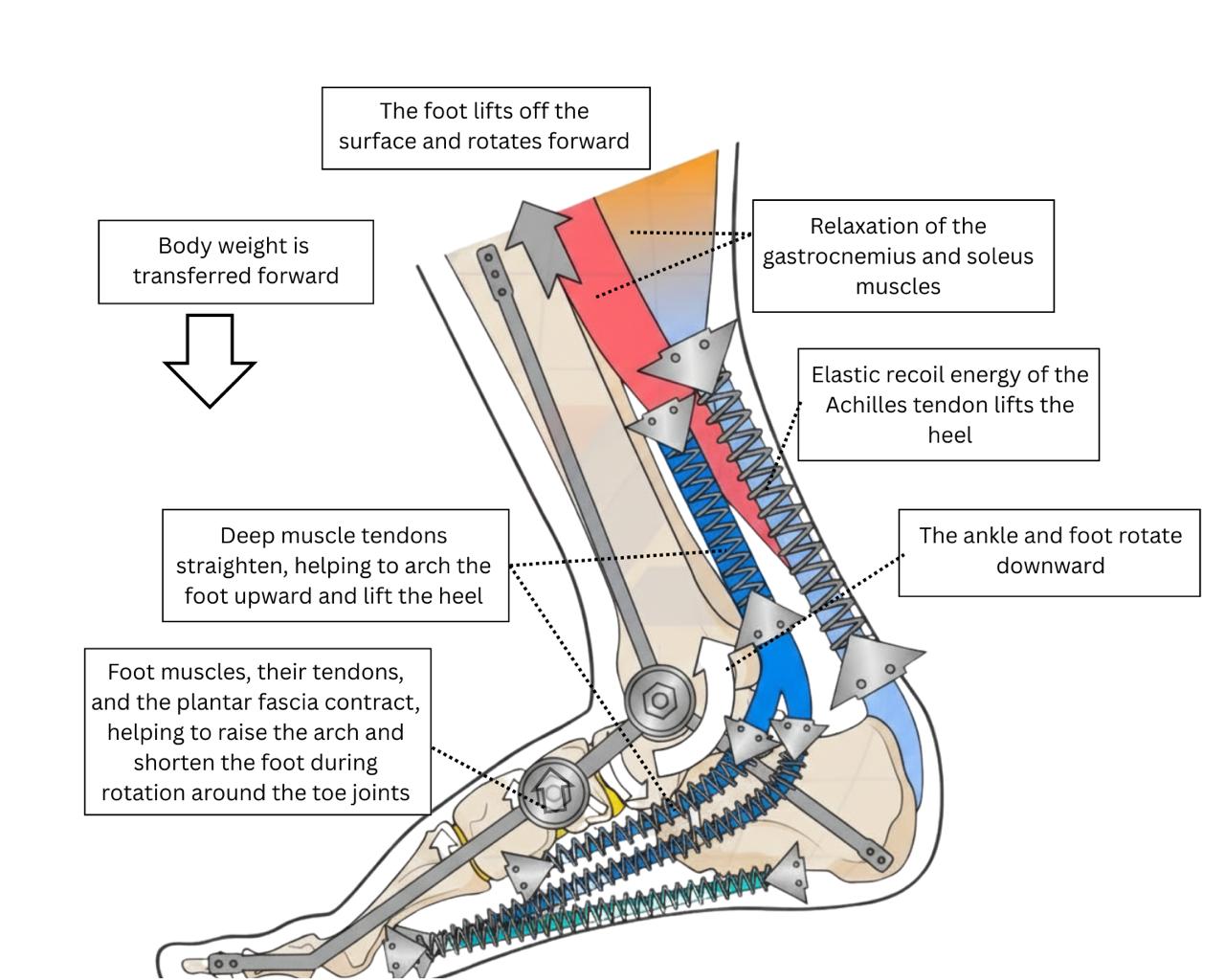
The problem: Under stress, through sedentary habits or past physical strain, the fascia can lose elasticity and stiffen. You stop "springing" and begin to drag your body weight using muscles alone, dramatically raising the fatigue threshold.
The SI approach: Bodywork may be used to explore alignment and movement awareness, without promising injury prevention. Some people report a sense of greater lightness in movement — not because they have become stronger, but because the body has begun to support itself differently.
2. Skiing and Ski Touring: Control and Perception
Alpine skiing and freeride impose enormous loads on the joints. In a turn, the skier is subject to forces many times their body weight.
Biotensegrity: Your knee is not supported only by ligaments. It "floats" within a network of tension created by the fascial layers of the thigh. If this network is unevenly tensioned — for example, due to pelvic misalignment — load may distribute non-uniformly, creating discomfort in the joint.
Note: The term Tensegrity combines "tension" and "integrity".
If the guy ropes of a tent are unbalanced, the structure collapses.
Bodywork may be used to explore the balance of tension in the lateral and medial lines of the legs, supporting a more uniform distribution of pressure. Some people report sensing the ski with greater precision and tiring less. Responses are individual and cannot be guaranteed.
3. Neuroplasticity: Body Perception
Fascia is our primary sensory organ. It contains 6 to 10 times more receptors than muscles.
Manual work on the fascia may explore proprioception — the body's perception of itself in space. For a trail runner or climber, this is significant: greater movement awareness may support a faster response to unstable rocks or roots.
The Science of Recovery: Why Does the Body Feel "Like Wood"?
You know that feeling of morning stiffness or heaviness after a long trek? It is not always muscular. Often it is a process of densification.
According to studies by Carla Stecco, between the layers of deep fascia there is a "lubricant": hyaluronic acid.
Under normal conditions: It is fluid and muscles glide freely over one another.
Under overload, cold or static tension: The lubricant may thicken, becoming a kind of glue. Tissues adhere to each other, creating friction and loss of mobility.

Structural Integration uses slow, specifically angled pressure, creating the thixotropic effect: under the heat and pressure of the practitioner's hands, that viscous "glue" returns to a fluid lubricant.
Result: Tissue gliding is restored. Nutrients reach the muscles more quickly, and you may experience that "physical lightness" that is why we love sport.
A Practical Example
Hypothetical example: A cycling enthusiast experiences recurring tension in the lumbar area after long rides. Medical assessment has not identified a specific cause; muscular strengthening has not brought perceived improvement.
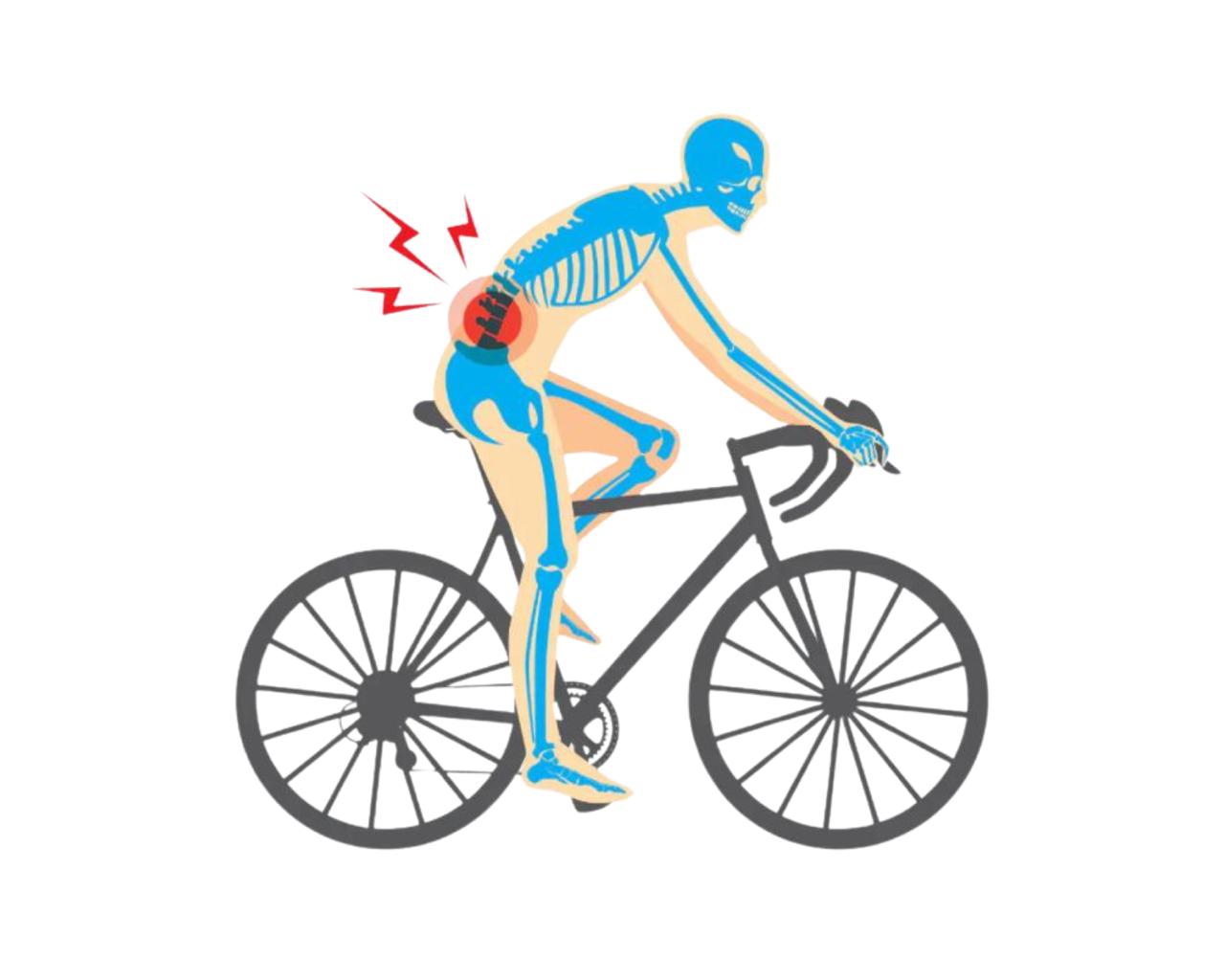
The Structural Integrator's observation: The issue may not originate in the back. Observation may reveal a shortening of the anterior line of the body (abdomen, ribcage, quadriceps) — a common consequence of office work or the cycling position. This line may "pull" the body forward, placing the back muscles under constant overload to maintain verticality.
The approach: Instead of working on the back (where discomfort is felt), the practitioner explores the abdomen and thighs (where the pull originates).
Sessions may explore patterns of tension and movement in different areas of the body. Some people report a sense of greater comfort and freedom of movement over time. Responses are individual.
The duration of perceived changes is individual and cannot be guaranteed.
Frequently Asked Questions
How long do perceived changes last?
The duration of perceived changes is individual and cannot be guaranteed. Unlike classic massage, whose effects are often temporary, SI works progressively with movement patterns and posture. However, results vary from person to person.
Is it painful?
Sensations may be intense, but they should not be painful. This is not a "releasing pain" — it is deep work with the tissue. The person may ask to adjust or stop the work at any time, and always remains in control of the process.
How many sessions are needed?
The number of sessions is agreed according to the person's goals and comfort. No predetermined number guarantees a result. For those wishing to explore the body's overall organisation, the classic 10-session protocol is often suggested. For a specific area — such as shoulder mobility for climbing — a shorter series may be explored.
Conclusion: An Investment in Your Reliability
In the outdoor world, we know that the reliability of our equipment matters more than its aesthetics. Your body is your primary equipment.
Structural Integration may support the exploration of movement, posture and body awareness — through a respectful, individual approach. Do not let accumulated tension limit your plans. Make your body your best ally on the mountain.
📍 Sessions take place in Bolzano.
✨ Book a free introductory conversation with Tatsiana Harelava
Contacts
 Tatsiana Harelava
Piazza delle Erbe, 37 | 39100 Bolzano
Hours:
Mon – Fri: 07:00–19:00
By appointment